Research
Soil microecology and molecular transformation of organic matter
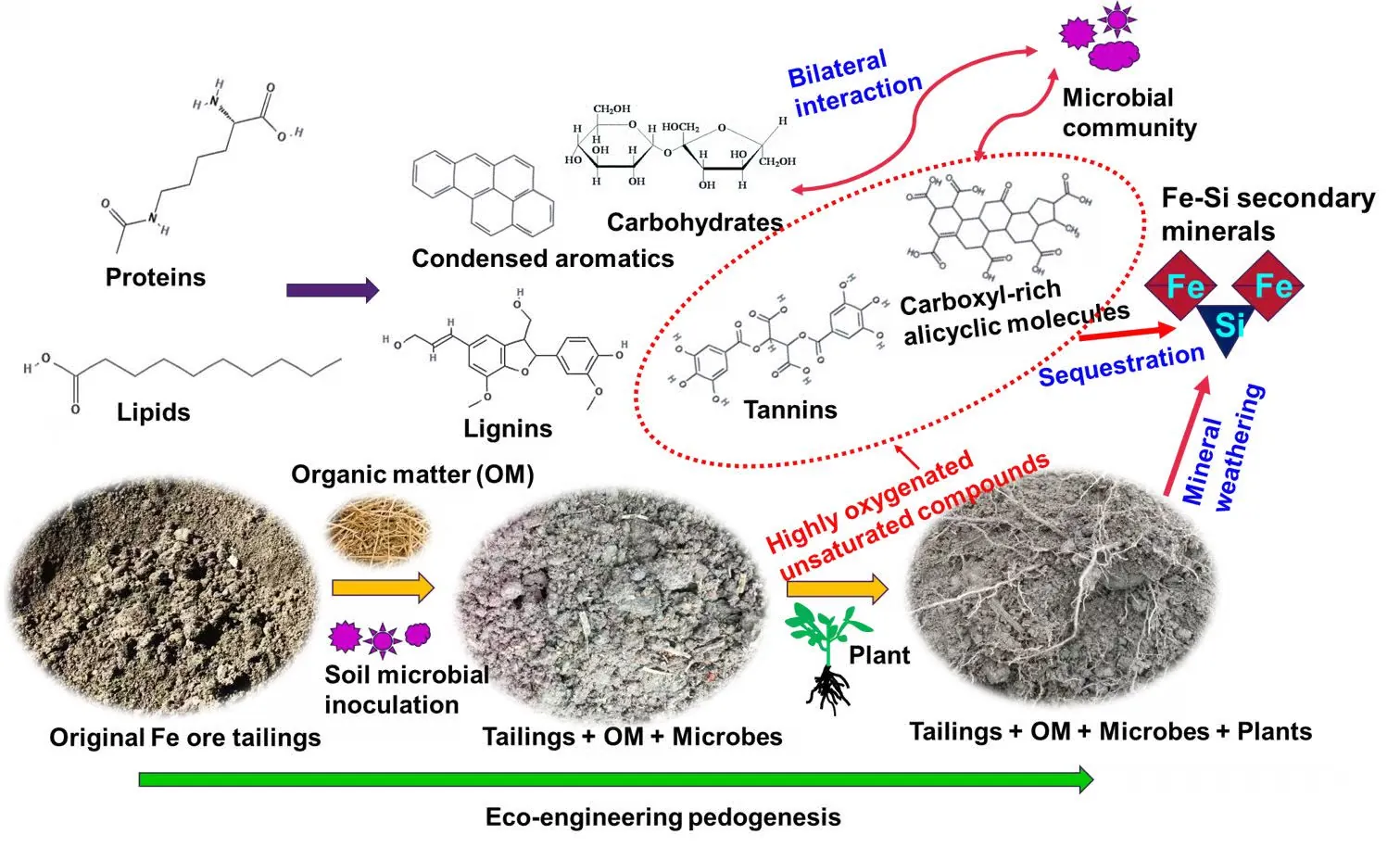
We elucidate how biological systems, including plants, soil animals, and microorganisms, drive the formation, transformation, and stabilization of soil organic matter in tailings and degraded soils.
This direction aims to elucidate the biological-system-driven formation, transformation, and stabilization mechanisms of soil organic matter, with a focus on plants, soil animals, and microorganisms. By combining high-resolution mass spectrometry for molecular characterization of organic matter with microbial ecological principles and techniques, we investigate how micro-ecosystems in complex environments such as mine tailings and degraded soils drive molecular-level dynamics and stabilization of organic matter.
Research topics include molecular transformation of plant residues and rhizodeposits, selective association between microbial organic matter and mineral surfaces, regulation of organic matter decomposition and re-synthesis by soil animals and microbial communities, and the effects of reactive Fe/Al/Si mineral phases on the stability of different molecular components.