Research
Organo-mineral interface processes and element cycling
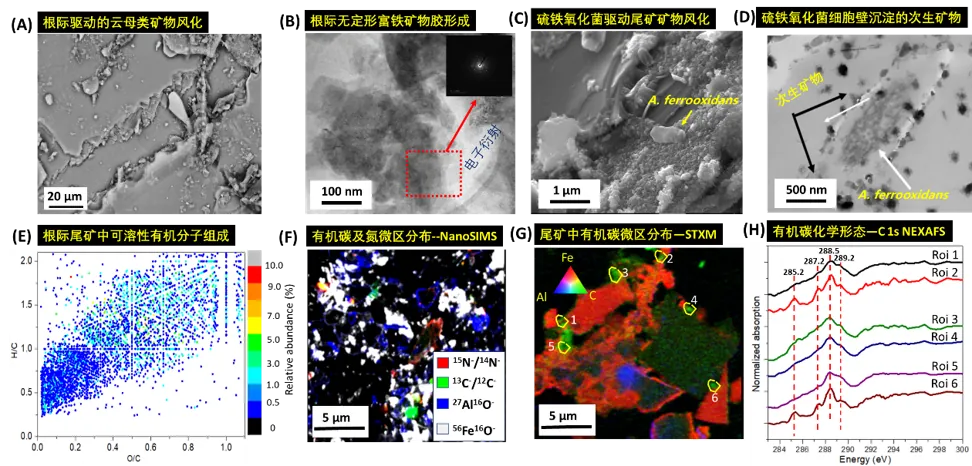
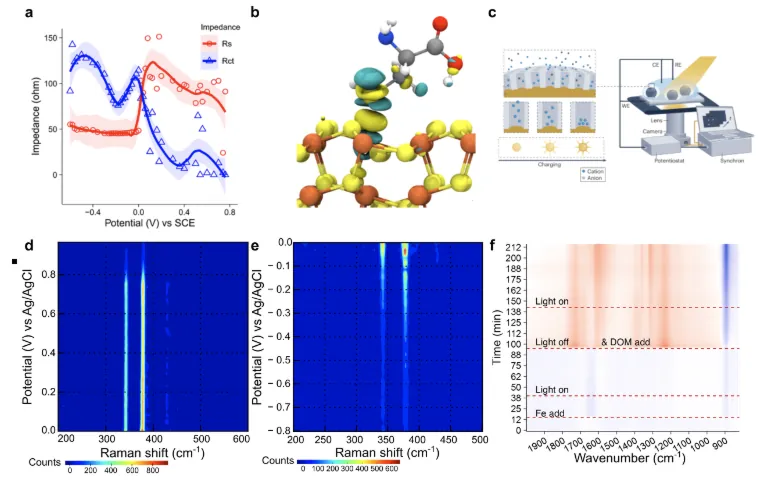
We characterize electron transfer, mineral dissolution and precipitation, metal transformation, and molecular fractionation of organic matter at mineral-water-organic matter-microbe interfaces.
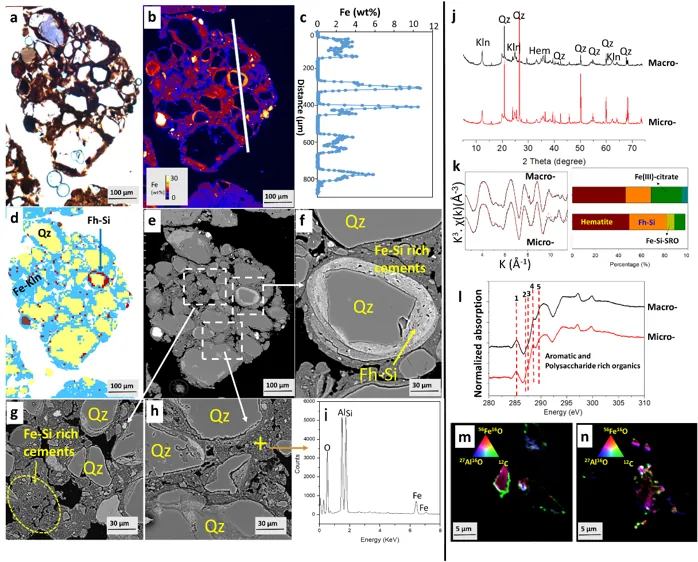
Organo-mineral interface reactions control element mobility, contaminant speciation, and organic carbon stabilization in tailings and degraded soils. This direction focuses on mineral weathering, sulfur and iron redox processes, metal retention, dissolved organic matter molecular fractionation, and microbially or electrochemically mediated interfacial transformations.
Using synchrotron-based XAFS/STXM, NanoSIMS, FTICR-MS, Orbitrap-MS, in situ spectroelectrochemistry, DFT calculations, and reactive transport modeling, we resolve the binding forms, spatial distribution, interfacial charge transfer, and reaction pathways of organic matter and reactive mineral phases from molecular to nano- and micrometer scales.